
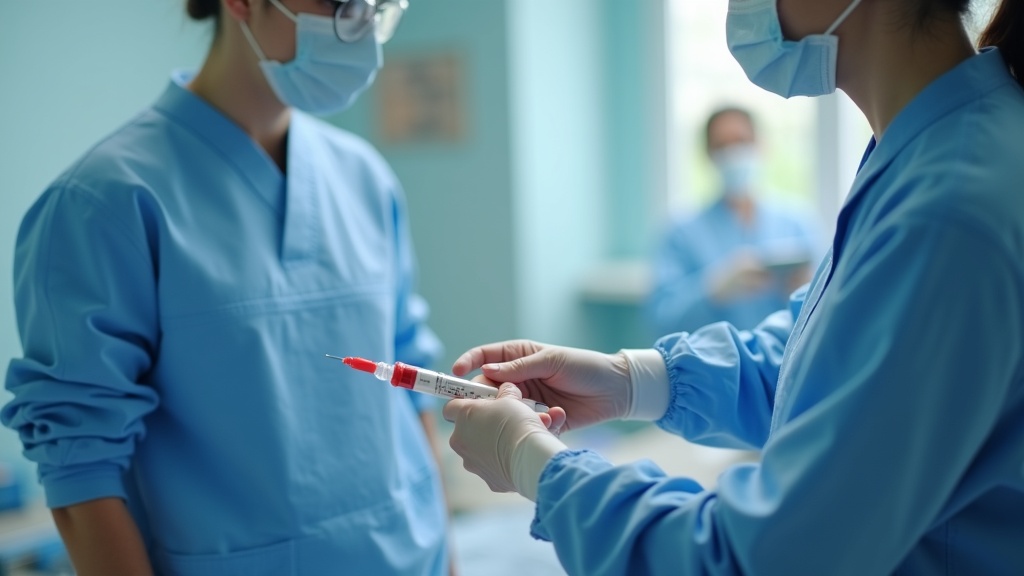
Phlebotomy Training: Your Path to a Growing Healthcare Career
Learn how phlebotomy training can lead to a stable and rewarding healthcare career. This guide covers certification requirements, job outlook, and how modern training methods are shaping the future of blood collection professionals.
Table of Contents
- What Phlebotomy Training Covers
- Certification and Career Requirements
- The Growing Demand for Phlebotomists
- How Modern Training Methods Are Changing the Field
- Frequently Asked Questions
- Phlebotomy Training Options Compared
- Practical Tips for Aspiring Phlebotomists
Article Snapshot
Phlebotomy training is a structured educational program that teaches students how to draw blood safely and professionally. This article explains the core components of training, certification pathways, job market trends, and how innovative training approaches are making the field more accessible.
Quick Stats: Phlebotomy Training
- Median annual wage for phlebotomists in the United States as of May 2024: $43,660 per year (U.S. Bureau of Labor Statistics, 2024)[1]
- Projected employment growth rate for phlebotomists from 2024 to 2034: 6% (U.S. Bureau of Labor Statistics, 2024)[1]
- Average number of annual job openings for phlebotomists projected between 2024 and 2034: 19,600 (U.S. Bureau of Labor Statistics, 2024)[1]
Introduction
Phlebotomy training is the first step toward a career that plays a vital role in modern healthcare. Every day, millions of patients rely on blood tests to diagnose conditions, monitor treatments, and manage chronic diseases. The professionals who collect those blood samples – phlebotomists – are essential to the diagnostic process. This article covers the key elements of phlebotomy training, what certification involves, the strong job outlook for the field, and how emerging training methods are helping students prepare for this hands-on role. Whether you are considering a career change or starting fresh in healthcare, understanding the training landscape is critical.
What Phlebotomy Training Covers
Phlebotomy training programs equip students with the technical and interpersonal skills needed to perform blood collection safely and efficiently. Most programs result in a postsecondary nondegree award, such as a certificate or diploma, and can be completed in a few months (U.S. Bureau of Labor Statistics, 2024)[1]. The curriculum blends classroom instruction with hands-on clinical practice.
Core Technical Skills
The foundation of any phlebotomy program is teaching students how to perform venipuncture (drawing blood from a vein) and capillary punctures (fingersticks and heelsticks). Students learn to select appropriate veins, use various collection devices such as vacuum tubes and butterfly needles, and follow proper procedures for different patient populations, including infants, older adults, and patients with difficult veins. The Cleveland Clinic School of Phlebotomy states that their program emphasizes “quality specimen collection, infection control, and compassionate patient interaction” (Cleveland Clinic School of Phlebotomy, 2025)[2].
Safety and Infection Control
A significant portion of training focuses on infection prevention. Students learn standard precautions, proper hand hygiene, correct disposal of sharps, and how to handle accidental needle sticks. They also study the chain of infection and how to maintain a sterile field. Understanding these protocols is crucial because it protects both the patient and the phlebotomist from bloodborne pathogens.
Patient Communication and Ethics
Phlebotomy is a patient-facing role. Training programs teach students how to explain procedures, alleviate patient anxiety, obtain consent, and handle difficult situations such as a patient who faints or refuses the draw. Students also learn about patient privacy laws (HIPAA) and ethical conduct in healthcare settings. These soft skills are as important as the technical ones in delivering quality care.
Certification and Career Requirements
While formal training is the entry point, most employers require professional certification to work as a phlebotomist. The U.S. Bureau of Labor Statistics notes that “employers typically require professional certification to demonstrate competence in blood collection and safety” (U.S. Bureau of Labor Statistics, 2024)[1]. Certification validates that a candidate has met national standards for knowledge and skill.
National Certification Options
Several organizations offer phlebotomy certification exams. The National Healthcareer Association (NHA) offers the Certified Phlebotomy Technician (CPT) credential. To qualify, candidates must complete an accredited training program and pass a comprehensive exam. The NHA states that “earning a nationally recognized phlebotomy certification demonstrates that you have mastered standardized blood collection procedures and are committed to ongoing continuing education” (National Healthcareer Association, 2024)[3]. Other major certifying bodies include the American Society for Clinical Pathology (ASCP) and the American Medical Technologists (AMT).
State-Specific Licensure
Some states have additional licensing requirements beyond national certification. For example, California, Nevada, and Louisiana require phlebotomists to hold a state license. These licenses often require a specific number of clinical hours, a background check, and a state-administered exam. Aspiring phlebotomists should check the requirements for the state where they plan to work.
Maintaining Certification
Certification is not a one-time event. Most certifying bodies require phlebotomists to earn continuing education credits (CEUs) every two years to maintain their credential. This ensures that professionals stay current with best practices, new technologies, and evolving safety standards. Many employers offer tuition reimbursement or in-service training to help staff meet these requirements.
The Growing Demand for Phlebotomists
The job market for phlebotomists is strong and expected to remain so. The U.S. Bureau of Labor Statistics projects a 6% growth in employment for phlebotomists from 2024 to 2034, which is faster than the average for all occupations (U.S. Bureau of Labor Statistics, 2024)[1]. The agency also estimates an average of 19,600 job openings each year over the same period, driven by both growth and the need to replace workers who retire or leave the field (U.S. Bureau of Labor Statistics, 2024)[1].
Why Demand Is Rising
Several factors are fueling this demand. The aging baby boomer population requires more medical tests to manage chronic conditions such as diabetes, heart disease, and cancer. Advances in diagnostic technology are also increasing the number of tests ordered per patient. The U.S. Bureau of Labor Statistics confirms that “as the volume of laboratory tests increases and blood analysis remains central to medical diagnosis, demand for trained phlebotomists is projected to grow” (U.S. Bureau of Labor Statistics, 2024)[1].
Earning Potential
Phlebotomy offers a competitive entry-level wage. The median annual wage for phlebotomists in the United States was $43,660 as of May 2024 (U.S. Bureau of Labor Statistics, 2024)[1]. Experienced phlebotomists, especially those who work in hospitals or as traveling phlebotomists, can earn significantly more. For example, the average salary for traveling phlebotomists was reported at $51,500 per year (ZipRecruiter via Coursera, 2024)[4]. The average hourly wage reported by Indeed was $21.22 (Indeed via Coursera, 2024)[4].
Work Settings and Schedules
Phlebotomists work in a variety of settings: hospitals, diagnostic laboratories, physician offices, blood donation centers, nursing homes, and home health agencies. Many positions offer flexible scheduling, including part-time, evening, and weekend shifts. This makes phlebotomy an attractive option for those seeking work-life balance or a second career.
How Modern Training Methods Are Changing the Field
The way phlebotomy training is delivered is evolving. While traditional in-person programs remain the standard, new technologies are providing students with more flexible and effective ways to learn. This is especially relevant for those balancing work, family, or other commitments.
Online and Blended Learning Models
Many accredited programs now offer hybrid formats where students complete the didactic portion online and then attend in-person labs for hands-on practice. This model reduces travel time and allows students to learn at their own pace. The classroom portion covers anatomy, medical terminology, infection control, and legal issues, while the lab component ensures students develop the manual dexterity required for venipuncture.
Simulation and Virtual Reality
An emerging trend in phlebotomy training is the use of simulation. Advanced mannequins with synthetic veins allow students to practice countless sticks without causing discomfort to real patients. Some programs are even exploring virtual reality (VR) to simulate the clinical environment. For example, modern training centers are beginning to integrate AI-driven feedback systems that analyze a student’s technique in real-time. You can learn more about how these innovative approaches are being developed through AI training for healthcare simulations, which is helping to create more realistic and effective practice scenarios.
Accelerated and Specialty Programs
Some institutions offer accelerated phlebotomy programs that can be completed in as little as four to eight weeks. These intensive courses are designed for students who can commit to full-time study. On the other end of the spectrum, some programs offer specialty tracks in areas such as geriatric phlebotomy, pediatric phlebotomy, or donor phlebotomy. This allows graduates to position themselves for specific roles in the job market.
Important Questions About Phlebotomy Training
How long does it take to complete phlebotomy training?
Most phlebotomy certificate programs take between four and eight months to complete. Accelerated programs can be finished in as little as four to eight weeks of full-time study. The exact duration depends on the program structure, the number of clinical hours required, and whether the student is attending part-time or full-time. After completing training, graduates typically need to pass a certification exam, which adds additional preparation time.
Do I need a college degree to become a phlebotomist?
No, a college degree is not required. The standard entry-level education is a postsecondary nondegree award from a phlebotomy program, which is typically offered by community colleges, vocational schools, and some hospitals. Many programs also require a high school diploma or GED for admission. While a degree is not necessary, some phlebotomists choose to pursue an associate degree in a related field, such as medical laboratory technology, to open up additional career advancement opportunities.
What is the hardest part of phlebotomy training?
For most students, the hardest part is mastering the practical skill of venipuncture. Finding a vein, inserting the needle at the correct angle, and collecting the blood without causing the vein to collapse or the patient excessive discomfort requires fine motor control and practice. Many students also find the anatomy and physiology component challenging, as they must learn the names and locations of major veins. Overcoming the fear of sticking another person with a needle is another common hurdle that improves with supervised practice.
Can I get phlebotomy training online?
Yes, many accredited programs offer online or hybrid phlebotomy training. The theory portion, which covers medical terminology, anatomy, infection control, and legal issues, can be completed entirely online. However, all phlebotomy programs require an in-person clinical component where students practice blood draws on mannequins and live subjects under supervision. A purely online program without a hands-on lab will not qualify you for certification. When choosing a program, ensure it includes a clinical externship or lab component that meets the requirements of your certifying body.
Phlebotomy Training Options Compared
Choosing the right training pathway depends on your budget, timeline, and career goals. The table below compares the most common options available to aspiring phlebotomists.
| Training Option | Duration | Cost Range | Best For |
|---|---|---|---|
| Community College Certificate | 4–8 months | $1,000–$3,000 | Students seeking a comprehensive program with financial aid options |
| Vocational School Diploma | 3–6 months | $1,500–$4,000 | Those who want a focused, fast-paced curriculum |
| Hospital-Based Program | 6–12 months | $500–$2,000 (often subsidized) | Students who prefer hands-on training in a real clinical setting |
| Online/Hybrid Program | 4–8 months | $1,200–$3,500 | Students needing flexibility for work or family obligations |
Practical Tips for Aspiring Phlebotomists
Starting a career in phlebotomy requires more than just completing a course. Here are actionable tips to help you succeed.
- Choose an accredited program. Before enrolling, verify that the program is accredited by a recognized agency such as the National Accrediting Agency for Clinical Laboratory Sciences (NAACLS). Accreditation ensures that your training meets the standards required for certification.
- Practice your soft skills. Phlebotomy is a people job. Practice explaining procedures in simple terms, maintaining eye contact, and staying calm when a patient is anxious. These skills will set you apart during job interviews and on the job.
- Prepare for the certification exam early. Do not wait until after graduation to start studying. Use online practice tests and study guides from organizations like the NHA or ASCP. A good score on the certification exam opens more job opportunities.
- Gain experience through externships. Many programs include a clinical externship. Treat this as a working interview. Show up on time, ask questions, and network with the lab staff. Many externships lead directly to job offers.
- Stay current with continuing education. Even after you are certified, keep learning. Attend workshops, read industry journals, and consider cross-training in related areas like EKG or medical assisting to increase your value to employers. For those interested in further developing their professional skills, exploring resources like cdl permit training or cdl weekend training can provide insight into other structured career pathways, though for healthcare, specialized phlebotomy resources are most relevant.
Key Takeaways
Phlebotomy training is a practical, affordable, and fast pathway into the healthcare industry. With a strong job outlook, competitive wages, and multiple work settings to choose from, it is an excellent option for those who want to make a difference in patient care without spending years in school. The key to success is choosing an accredited program, earning a national certification, and continuously refining both your technical and interpersonal skills. If you are ready to take the next step, start by researching programs in your area and speaking with admissions counselors about your options. For more information on healthcare careers and training resources, explore the articles available on tshirtinsight.com.
Useful Resources
- Phlebotomists – Occupational Outlook Handbook. U.S. Bureau of Labor Statistics.
https://www.bls.gov/ooh/healthcare/phlebotomists.htm - Phlebotomy Program – School of Health Professions. Cleveland Clinic.
https://my.clevelandclinic.org/departments/education/school-health-professions/programs/phlebotomy-program - Certified Phlebotomy Technician (CPT) – Phlebotomy Certification. National Healthcareer Association.
https://www.nhanow.com/certification/nha-certifications/certified-phlebotomy-technician-(cpt) - Phlebotomist Salary: Your 2024 Guide. Coursera.
https://www.coursera.org/articles/phlebotomist-salary