
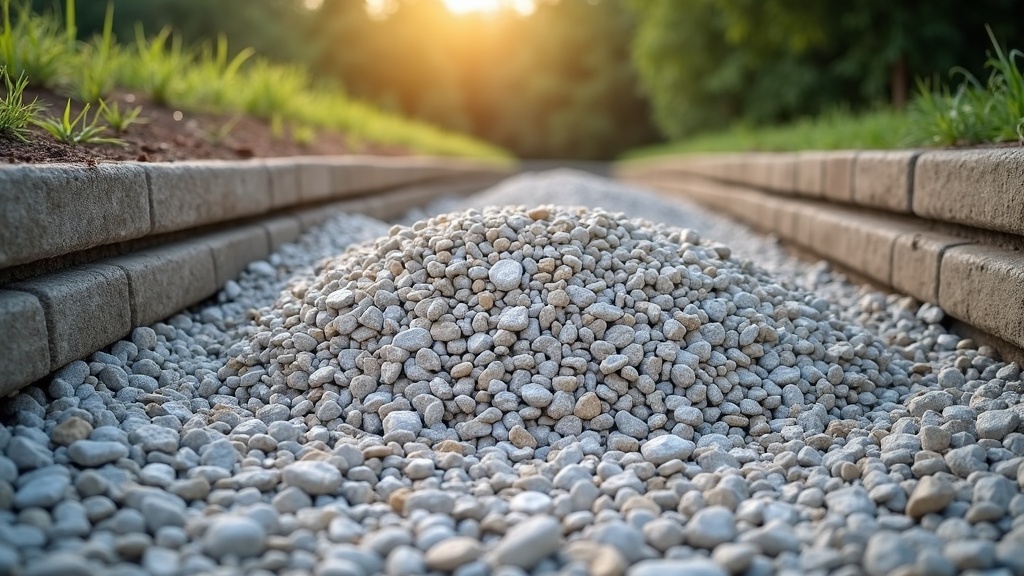
Gravel Backfill for Retaining Wall: Essential Guide
Learn how gravel backfill for retaining wall systems prevents hydrostatic pressure, improves drainage, and extends wall lifespan. This guide covers materials, installation depths, compaction lifts, and common mistakes to avoid.
Table of Contents
- The Role of Gravel Backfill in Retaining Wall Drainage
- Selecting the Right Gravel for Retaining Wall Backfill
- Proper Installation Techniques for Gravel Backfill
- Common Mistakes to Avoid with Gravel Backfill
- What People Are Asking
- Comparison of Backfill Materials
- Practical Tips for Long-Term Wall Stability
- Final Thoughts on Gravel Backfill for Retaining Wall
- Sources & Citations
Quick Summary
Gravel backfill for retaining wall drainage is a free-draining granular layer placed directly behind the wall to relieve hydrostatic pressure and prevent structural failure. Industry standards recommend a minimum 12-inch wide zone of angular gravel, compacted in lifts of 8 inches or less. Using the correct aggregate size and proper installation prevents costly wall movement and water damage.
Market Snapshot
- Minimum recommended depth of granular gravel backfill behind a retaining wall: 12 inches (The Constructor, 2025)[1]
- Standard drainage zone width for walls over 4 feet tall: 12–16 inches (Ware Landscaping, 2025)[2]
- Typical angular crushed stone size for free-draining backfill: 0.75 inches (How to Hardscape, 2025)[3]
- Maximum recommended compaction lift thickness: 8 inches (200 mm) (Allan Block, 2024)[4]
Introduction
Gravel backfill for retaining wall systems is a critical element that directly affects drainage, lateral earth pressure, and long-term stability. Without a properly designed gravel drainage zone, water accumulates behind the wall, increasing hydrostatic pressure that can cause bulging, cracking, or complete failure. The choice of backfill material – its grain size, angularity, and compaction characteristics – determines how effectively water moves away from the wall structure. This article examines the role of gravel backfill, how to select the right aggregate, proper installation methods, and common pitfalls to avoid. By understanding these principles, you can ensure your retaining wall project remains stable and dry for decades.
The Role of Gravel Backfill in Retaining Wall Drainage
Gravel backfill for retaining wall drainage serves two primary functions: it allows water to percolate downward quickly instead of building up behind the wall, and it reduces the lateral earth pressure exerted on the wall structure. When fine-grained soils like clay or silt are used as backfill, they retain moisture and expand, increasing pressure. Gravel, especially angular crushed stone, creates void spaces that facilitate rapid drainage.
Proper drainage prevents several failure modes. Water accumulation behind a retaining wall can double or triple the lateral pressure on the wall, leading to overturning or sliding. In winter, freeze-thaw cycles in waterlogged backfill cause additional heaving. A free-draining gravel zone, combined with a perforated drainage pipe at the base, captures and redirects water away from the wall. The minimum recommended width of this gravel zone is 12 inches (The Constructor, 2025)[1]. For walls exceeding 4 feet in height, the drainage zone should be 12 to 16 inches wide (Ware Landscaping, 2025)[2].
In mining and industrial applications, the same drainage principles apply, often with stricter specifications to handle high hydraulic loads. The key takeaway is that gravel backfill is not optional; it is an engineered component that directly impacts wall performance.
Selecting the Right Gravel for Retaining Wall Backfill
Choosing the correct gravel backfill for retaining wall construction involves three criteria: particle size, angularity, and cleanliness. Angular crushed stone with sharp edges interlocks better than rounded gravel, providing greater shear resistance against sliding. The preferred size range is 0.75 to 1.5 inches for the main drainage zone[5], although some sources recommend 0.5 to 0.75 inches for residential walls (Constructli, 2026)[6].
Common gravel types
- ASTM #57 crushed stone (0.75-inch nominal) – widely used for drainage behind retaining walls (How to Hardscape, 2025)[3]
- ASTM #4 stone (1.5-inch nominal) – used for larger walls or where higher flow capacity is needed
- Pea gravel (0.25–0.5 inch) – not recommended due to poor interlock and potential clogging
Avoid using crushed limestone that has high fines content unless washed. Fines (silt and clay particles) can clog the voids and reduce drainage capacity. The maximum particle size in the first 15 cm (6 inches) immediately behind the wall should not exceed 10 mm (The Constructor, 2025)[7] to prevent blocking weep holes. The angular crushed clear stone size of 0.75 inch (ASTM #57) effectively reduces lateral earth pressure while managing water (How to Hardscape, 2025)[3].
Proper Installation Techniques for Gravel Backfill
Even the best gravel backfill for retaining wall performance fails if installed incorrectly. The installation process follows a sequence: excavation, base preparation, wall block placement, drainage pipe installation, backfilling, and compaction. The backfill is placed in lifts – thin horizontal layers – and each lift is compacted before the next is added. The maximum recommended lift thickness is 8 inches (200 mm) (Allan Block, 2024)[4].
According to Allan Block Corporate Engineering, “Backfilling and compacting in lifts of 8 inches (200 mm) or less using wall rock and approved infill soils like sand and gravel will greatly reduce settlement and maintain the integrity of the retaining wall system.”[8] For the drainage zone directly behind the wall, use angular gravel in the 0.5- to 0.75-inch range and backfill a minimum width of 12 inches (Constructli, 2026)[6]. Beyond that zone, native soil or a select granular fill can be used, but it must also be compacted in lifts.
Key steps include: place a perforated drainage pipe at the wall base, wrap the pipe in filter fabric to prevent fine migration, then place at least 12 inches of gravel over and around the pipe. A common mistake is using too narrow a gravel zone or not extending the gravel to the full height of the wall. For taller walls, consider a second drainage pipe at mid-height. After backfilling, verify that weep holes (if used) are aligned with the gravel layer.
Common Mistakes to Avoid with Gravel Backfill
Even experienced builders occasionally make errors when installing gravel backfill for retaining wall projects. The most frequent mistakes include using rounded gravel or pea gravel, failing to compact in lifts, and skimping on the drainage zone width. Rounded gravel does not lock together, allowing wall movement under pressure. Skipping compaction in lifts of more than 8 inches leads to uneven settlement and wall leaning.
Another common error is not wrapping the drainage pipe in filter fabric. Without fabric, fine soil particles migrate into the gravel and clog the pipe over time. Similarly, using gravel that contains excessive fines (dust or clay) reduces the void space and impairs drainage. Always specify “crusher run” or “clean” angular stone and wash it if necessary. Backfilling too quickly before the wall blocks have cured (in mortarless systems) can push blocks out of alignment. Follow a stepwise approach: place a course of blocks, add backfill, compact, then repeat.
Lastly, ignoring the groundwater table level can be costly. If the natural water table is high, consider a French drain or an underdrain system that collects water before it reaches the wall. A well-documented backfill specification prevents costly repairs and ensures decades of reliable performance.
What People Are Asking
1. What size gravel is best for backfilling a retaining wall?
The ideal size for gravel backfill for retaining wall drainage is angular crushed stone ranging from 0.75 to 1.5 inches in diameter. ASTM #57 (0.75 inch nominal) is the most common choice for residential walls. For taller walls, a mix of 0.75 to 1.5 inches provides better void space and drainage capacity. Avoid rounded pea gravel (under 0.5 inch) because it lacks interlock and can shift under load.
2. How deep should the gravel drainage zone be behind a retaining wall?
Industry standards recommend a minimum depth of 12 inches of gravel backfill directly behind the wall. For walls exceeding 4 feet in height, the gravel drainage zone should be 12 to 16 inches wide. The gravel should extend from the base of the wall (above the footing) to within 6 inches of the top surface, ensuring that water can drain freely across the entire wall height.
3. Do I need a drainage pipe inside the gravel backfill zone?
Yes, for most retaining walls a perforated drainage pipe is essential. The pipe should be placed at the base of the wall, slightly sloped (1/4 inch per foot) toward an outlet. Wrap the pipe in filter fabric to prevent clogging, and cover it with at least 12 inches of gravel. For walls over 4 feet, a second pipe at mid-height improves performance. The gravel zone above the pipe also serves as a water collection area before it enters the pipe.
4. Can I use gravel backfill from a local quarry without washing it?
It depends on the fines content. Clean, angular crushed stone with less than 5% passing a #200 sieve is acceptable. If the gravel contains visible dust or clay, wash it before installation. Excess fines fill the void spaces and reduce drainage capacity, leading to hydrostatic pressure buildup. Specify “washed ASTM #57” or “clean crushed stone” to ensure quality. Many quarries offer clean material without extra cost.
Comparison of Backfill Materials
Selecting between gravel, sand, and native soil backfill affects drainage, cost, and wall stability. Gravel is the best performer for drainage but costs more than native soil. Sand drains moderately but can migrate through weep holes. The table below compares key factors for each material.
| Material | Drainage | Compaction Effort | Cost | Risk of Settlement |
|---|---|---|---|---|
| Angular gravel (0.75–1.5 in) | Excellent | Low to moderate | Moderate | Low |
| Clean coarse sand | Good | Moderate | Low | Moderate |
| Native soil (clay/silt) | Poor | High | Free | High |
| Stone dust (crusher screenings) | Fair | Moderate | Low | Moderate |
For retaining wall construction, gravel backfill for retaining wall applications offers the best balance of drainage and stability. Sand can be used in a pinch with proper drainage, but native soil and crusher fines are not recommended for the drainage zone.
Practical Tips for Long-Term Wall Stability
Implement these best practices to maximize the performance of your gravel backfill for retaining wall project:
- Always use angular, crushed stone – avoid river rock or pea gravel for the drainage zone. The sharp edges lock together and resist sliding.
- Compact in 8-inch lifts (200 mm) – use a hand tamper or plate compactor for small walls, and a vibratory roller for large walls. Do not exceed lift thickness to avoid settlement.
- Install filter fabric between gravel and native soil – prevents migration of fines into the gravel zone and extends drainage life.
- Slope the drainage pipe at least 1/4 inch per foot toward an outlet. Test the pipe flow after installation by pouring water into the backfill.
- Extend gravel backfill to within 6 inches of the top surface – leaving a gap allows topsoil to cap the wall but does not compromise drainage.
- For walls over 6 feet, consult a geotechnical engineer – they can design a tailored backfill specification including reinforcement and intermediate drainage.
For more about Gravel backfill for retaining wall, see get expert advice on gravel backfill for retaining wall.
Final Thoughts on Gravel Backfill for Retaining Wall
Proper gravel backfill for retaining wall systems is not an optional detail – it is a structural requirement that prevents water damage and wall failure. By selecting angular crushed stone in the correct size range, installing a minimum 12-inch drainage zone, and following compaction procedures, you ensure decades of reliable performance. Whether you are building a residential garden wall or a large commercial structure, attention to backfill details pays dividends.
Sources & Citations
- Which Best Material for Backfill of Retaining Wall? The Constructor.
https://theconstructor.org/question/which-best-material-for-backfill-of-retaining-wall/ - Best Rock Base for Retaining Walls: What Works And What Doesn’t. Ware Landscaping.
https://warelandscaping.com/best-rock-base-for-retaining-walls - Backfilling a Retaining Wall. How to Hardscape.
https://howtohardscape.com/backfilling-a-retaining-wall/ - How to Properly Backfill and Compact Retaining Walls Using Allan Block. Allan Block (YouTube).
https://www.youtube.com/watch?v=7UpukRBzm8E - Retaining Walls Backfill – Uses and Applications. Gravelshop.
https://www.gravelshop.com/application-and-uses/retaining-walls-backfill-108.asp - How to Backfill a Retaining Wall | 8 Easy Steps (2026). Constructli.
https://constructli.com/how-to-backfill-a-retaining-wall/ - Civil Engineering detailing of free-draining backfill. Engineering Stack Exchange.
https://engineering.stackexchange.com/questions/42232/ - Allan Block Corporate Engineering. (2024). Backfilling and compacting guidance. YouTube.
https://www.youtube.com/watch?v=7UpukRBzm8E