
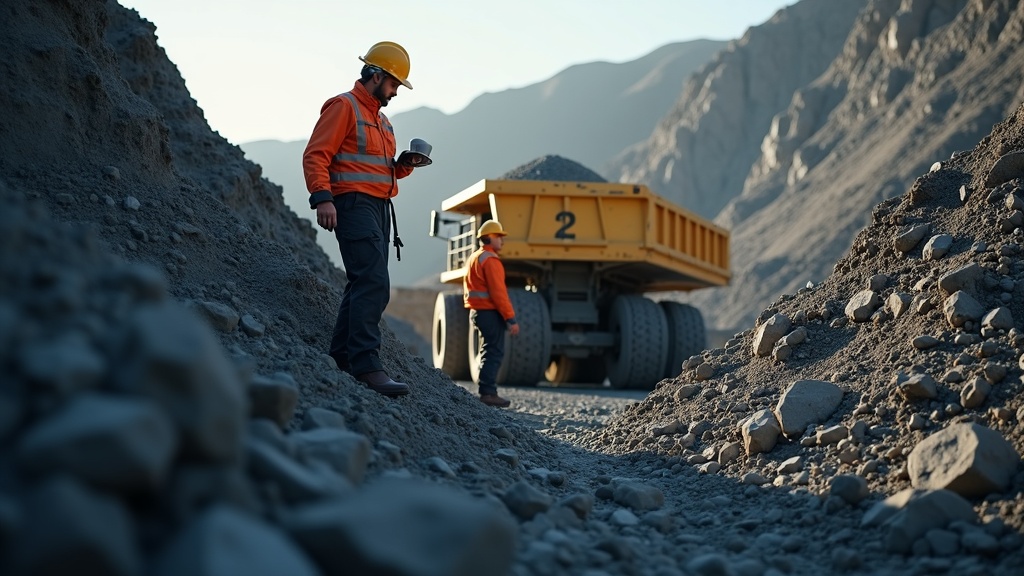
Mining Industry Workwear and Heavy Equipment Trends
Discover how the mining sector drives demand for rugged workwear and heavy machinery. Learn about industry growth, safety apparel, and tunneling equipment.
Table of Contents
- The Economic Scale of Global Mining
- Heavy Machinery and Subterranean Engineering
- Workforce Dynamics and Industrial Apparel Design
- Digital Transformation in Mining Operations
- What People Are Asking
- Fabric Comparison for Industrial Apparel
- Practical Tips for Workwear Design
Quick Summary
Mining is the extraction of valuable minerals and geological materials from the earth, forming the backbone of global infrastructure and energy transitions. This sector demands highly durable workwear and specialized tunneling machinery to support its massive workforce and complex underground operations safely.
Mining in Context
- Revenues of the world’s top 40 mining companies increased year‑on‑year in 2025, reaching 909 billion US dollars in total revenues for the top 40 mining companies (PwC, 2025)[1].
- The U.S. mining sector makes a significant direct contribution to national economic output, providing 85 billion US dollars contributed to U.S. GDP by the mining sector in 2023 (U.S.-Saudi Business Council, 2024)[2].
- Global mining and metals operations are distributed across 15,188 mines and processing facilities included in the ICMM Global Mining Dataset (International Council on Mining and Metals (ICMM), 2025)[3].
Introduction
Mining operations form the critical foundation of modern industrial supply chains, providing the raw materials necessary for everything from renewable energy grids to everyday consumer goods. As global demand for metals and minerals accelerates, the industry is experiencing significant financial growth and technological transformation. For apparel designers and industrial suppliers, this expansion creates unique opportunities to develop specialized safety workwear and rugged merchandise tailored to the harsh environments these workers face daily. Beyond clothing, the sector relies on advanced engineering solutions to maintain structural integrity in deep excavations. This article explores the economic scale of the extraction sector, the heavy machinery used in subterranean projects, workforce dynamics, and how industrial design intersects with operational safety.
The Economic Scale of Global Mining
The financial footprint of the mineral recovery industry is vast, driving substantial global economic activity and infrastructure development. In recent years, the sector has seen remarkable revenue growth, reflecting the surging demand for raw materials required in modern construction and technology. According to industry analysis, the top 40 global companies generated massive returns, highlighting the lucrative nature of large-scale resource harvesting and improving aggregate EBITDA margins across the board.
Kevin Ellis, UK Chair and Senior Partner at PwC, noted that “Mining has a critical role to play in enabling the energy transition, but the sector must accelerate investment and innovation if it is to provide the metals and minerals the world needs in a sustainable way” (PwC, 2025)[1].
This financial strength translates directly into robust capital expenditure on operational improvements and workforce support. Business leaders navigating this complex landscape often require specialized entrepreneur mindset training to manage the volatile commodity cycles and massive logistical challenges inherent to the field. The capital generated by these enterprises trickles down into local economies, funding community projects and supporting secondary industries, including the manufacturing of heavy-duty industrial apparel. As companies expand their physical footprint, the need for durable, branded workwear for their growing employee base becomes a significant secondary market for textile designers and merchandise suppliers.
Heavy Machinery and Subterranean Engineering
Beneath the surface, subterranean operations demand highly specialized engineering techniques to ensure worker safety and structural stability. Tunneling and deep-shaft excavation require continuous ground stabilization to prevent cave-ins and manage water ingress. One of the most critical methods for securing these underground environments involves the injection of specialized cementitious mixtures into rock fissures. Engineers rely on high-shear colloidal grout mixers to produce perfectly homogenous slurries that can penetrate microscopic cracks in the bedrock, creating a solid, impermeable barrier.
The effectiveness of this ground reinforcement relies heavily on the precision of the mixing equipment. Operators must follow strict protocols to achieve the correct viscosity and shear strength, which is why consulting a comprehensive guide to grout mixing techniques is essential for site managers overseeing tunneling projects. Properly mixed grout not only secures the physical environment but also protects the heavy machinery and the personnel operating it.
For the crews working in these damp, high-stress environments, their personal protective equipment and daily workwear must be equally resilient. The intersection of heavy civil engineering and industrial safety gear ensures that both the physical infrastructure and the human workforce remain protected against the extreme pressures of underground resource extraction.
Workforce Dynamics and Industrial Apparel Design
The human element of ore excavation is substantial, requiring a massive, highly skilled labor force to operate complex machinery and manage logistical networks. In the United States alone, the industry directly employs a vast number of workers, generating significant economic value through high average weekly earnings. Specifically, the U.S. mining industry directly employs a substantial workforce nationwide, accounting for 400,000 direct mining jobs in the United States in 2023 (U.S.-Saudi Business Council, 2024)[2]. This large workforce creates a consistent, high-volume demand for industrial safety apparel and customized corporate merchandise.
Designing t-shirts and workwear for this demographic requires a deep understanding of their daily physical demands. Garments must feature reinforced stitching, moisture-wicking fabrics, and high-visibility elements to comply with strict site safety regulations. Furthermore, company branding on these garments fosters team cohesion and corporate identity across remote job sites. Executives and site managers looking to optimize their organizational culture often invest in business success mindset training alongside upgrading their physical safety gear. By providing high-quality, comfortable, and compliant apparel, companies demonstrate a commitment to their workers’ well-being, which in turn boosts morale and productivity in challenging operational environments.
Digital Transformation in Mining Operations
The integration of advanced software and automated systems is rapidly modernizing traditional resource harvesting methods. Sensors, autonomous haulage trucks, and real-time data analytics are optimizing everything from blast patterns to mineral processing yields. Peter Bryant, Managing Director at Clareo, emphasized that “Digital technologies are fundamentally reshaping mining, from exploration to processing, and the companies that leverage data and automation effectively will set the productivity benchmarks for the next decade” (McKinsey & Company, 2025)[4]. This shift toward smart operations reduces human exposure to hazardous zones and improves overall site efficiency.
As operations become more digitized, the tracking of physical assets, including safety equipment and workwear, is also being modernized. RFID tags embedded in safety garments allow site managers to monitor the lifecycle of protective gear, ensuring that expired or damaged items are promptly replaced. For designers and suppliers, understanding these digital tracking requirements is crucial when developing new lines of industrial apparel. Industry professionals can review annual minerals yearbook publications to stay informed about broader technological and economic shifts affecting the sector. Ultimately, the fusion of digital tracking with rugged physical workwear represents the next frontier in operational safety and supply chain management.
What People Are Asking
What materials are best for industrial workwear t-shirts?
The best materials for industrial workwear t-shirts prioritize durability, moisture management, and safety compliance. Heavyweight cotton blends are popular for their breathability and comfort in moderate climates, while synthetic moisture-wicking fabrics are essential for high-heat environments to prevent heat stress. Additionally, many subterranean operations require garments treated with flame-resistant chemicals or woven from inherently fire-retardant fibers to protect workers from flash fires. Designers must also consider reinforced stitching at stress points and the integration of high-visibility reflective tape to ensure the apparel meets strict occupational safety standards.
How does ground stabilization work in tunneling projects?
Ground stabilization in tunneling involves reinforcing the surrounding rock or soil to prevent collapses and control groundwater flow. Engineers typically drill boreholes into the excavation face and inject specialized cementitious grouts under high pressure. This grout fills microscopic fractures and voids in the geology, hardening to create a solid, impermeable shell around the tunnel. The success of this process depends heavily on the shear mixing quality of the slurry, ensuring that the particles remain perfectly suspended and can penetrate deep into the rock matrix before curing.
Why is the extraction sector vital for renewable energy?
The extraction sector is indispensable for renewable energy because low-carbon technologies are highly materials-intensive. Solar panels, wind turbines, and high-capacity lithium-ion batteries require vast quantities of copper, lithium, cobalt, and rare earth elements. Without a robust and scalable supply of these critical minerals, the global transition away from fossil fuels would stall. Consequently, expanding responsible resource harvesting operations is a fundamental prerequisite for building the infrastructure needed to achieve international decarbonization and climate goals.
What safety standards apply to subterranean apparel?
Subterranean apparel must comply with stringent occupational health and safety regulations, which vary by jurisdiction but generally mandate high visibility, flame resistance, and durability. In the United States, the Mine Safety and Health Administration (MSHA) sets rigorous guidelines for personal protective equipment. Garments must often feature reflective striping for visibility in low-light conditions and be constructed from anti-static, flame-retardant materials to mitigate ignition risks in gas-prone environments. Regular inspections and strict lifecycle tracking ensure that all workwear remains compliant and effective throughout its usable lifespan.
Fabric Comparison for Industrial Apparel
Comparing fabric choices is essential for sourcing the right industrial apparel. Different materials offer distinct advantages depending on the specific environmental conditions of the job site.
| Fabric Type | Primary Advantage | Best Use Case |
|---|---|---|
| Heavyweight Cotton | Breathability and comfort | Moderate surface temperatures |
| Synthetic Blends | Moisture-wicking and quick-drying | High-heat and high-humidity zones |
| Flame-Resistant (FR) | Thermal protection and self-extinguishing | Subterranean and high-risk areas |
Selecting the appropriate textile ensures that workers remain comfortable while strictly adhering to site-specific safety protocols.
Practical Tips for Workwear Design
Designing and sourcing apparel for heavy industry requires a strategic approach to both functionality and compliance. Here are actionable tips for creating effective industrial workwear:
- Prioritize reinforced stitching at high-stress areas like the shoulders and hem to extend the garment’s lifespan in abrasive environments.
- Incorporate tagless printed labels to prevent skin irritation during long, physically demanding shifts underground or on surface sites.
- Use high-visibility reflective elements that meet ANSI/ISEA standards to ensure workers are easily seen by heavy machinery operators.
- Partner with suppliers who provide detailed lifecycle tracking and compliance documentation for all flame-resistant and protective treatments.
By focusing on these practical details, designers can deliver merchandise that genuinely supports the daily operational needs of the workforce.
Final Thoughts on Mining
The extraction sector remains a cornerstone of global economic development and the transition toward sustainable energy infrastructure. From the massive revenues generated by top corporations to the critical need for advanced tunneling machinery and durable safety apparel, the industry’s footprint is vast and multifaceted. For designers and suppliers, understanding the unique physical and regulatory demands of this workforce opens up significant opportunities in the industrial workwear market. To further develop your approach to creating specialized merchandise and navigating complex B2B markets, explore our resources on industrial apparel design strategies.
Useful Resources
- Mine 2026: Ambition to action. PwC.
https://www.pwc.com/gx/en/industries/energy-utilities-resources/publications/mine.html - Report: Mining and Manufacturing Industry in the United States. U.S.-Saudi Business Council.
https://ussaudi.org/report-mining-and-manufacturing-industry-in-the-united-states/ - Global Mining Dataset. International Council on Mining and Metals (ICMM).
https://www.icmm.com/global-datasets/mining-metals-facilities - The digital transformation of mining: From pit to port. McKinsey & Company.
https://www.mckinsey.com/industries/metals-and-mining/our-insights/the-digital-transformation-of-mining-from-pit-to-port