
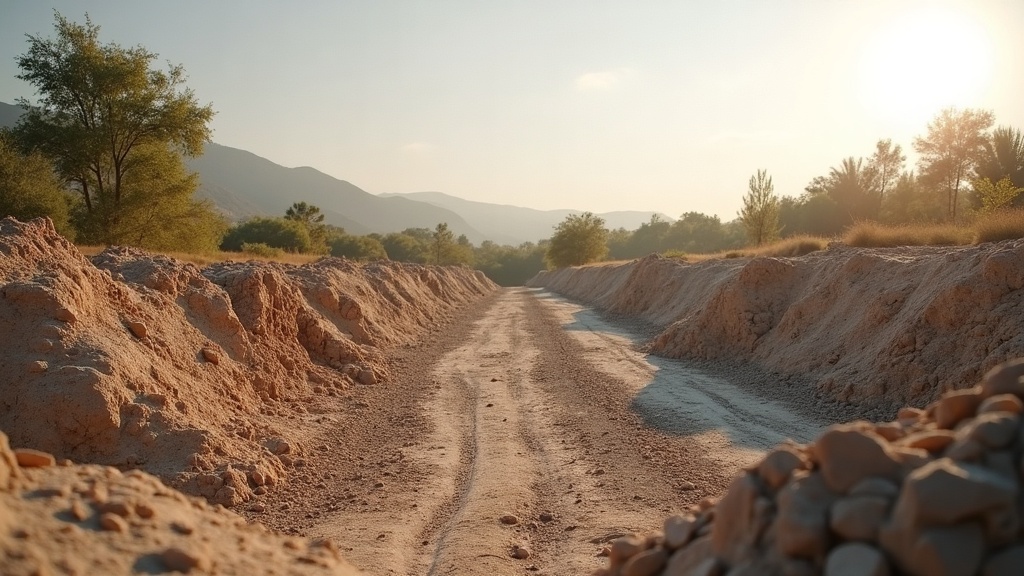
Foundation Backfill: Best Practices for T-Shirt Print Shops
Discover how proper foundation backfill techniques can prevent structural damage to your t-shirt print shop, ensuring a stable workspace for your screen printing and heat press equipment.
Table of Contents
- Why Foundation Backfill Matters for T-Shirt Businesses
- Common Foundation Backfill Methods for Commercial Spaces
- Compaction Standards for a Stable Print Shop Floor
- Preventing Future Issues with Proper Backfill
- Frequently Asked Questions
- Comparison of Backfill Approaches
- Practical Tips for T-Shirt Shop Owners
- Final Thoughts on Foundation Backfill
Article Snapshot: Foundation backfill is the process of replacing soil around a building’s foundation after construction. For t-shirt print shops, proper backfill prevents floor cracks, wall shifts, and equipment misalignment. This guide covers methods, compaction standards, and maintenance tips to protect your business investment.
Market Snapshot
- The mine backfill services market is projected to grow from US$4.1 billion in 2024 to US$6.8 billion by 2031 (Persistence Market Research, 2025)[1].
- Alternative research estimates the global mine backfill services market at US$1.2 billion in 2024, with a CAGR of 5.2% from 2026 to 2033 (Verified Market Reports, 2026)[2].
- The foundation repair services market is expected to reach US$4.1 billion by 2033, growing at a CAGR of 4.6% from 2026 (Persistence Market Research, 2026)[3].
Why Foundation Backfill Matters for T-Shirt Businesses
When you lease or buy a commercial space for your t-shirt print shop, the last thing on your mind is what lies beneath the concrete floor. Yet the ground under your screen printing presses, heat transfer machines, and drying tunnels directly affects your daily operations. Foundation backfill refers to the soil or aggregate material placed around a building’s foundation after the walls are poured. If done poorly, the floor can settle unevenly, causing expensive screen printing equipment to tilt or vibrate during operation.
A stable foundation is especially critical for t-shirt businesses because screen printing presses require a perfectly level surface. Even a quarter-inch of settlement can throw off registration between screens, ruining multi-color prints. The European Commission defines backfilling as a recovery operation where suitable waste is used for reclamation purposes (Eurostat, 2024)[4]. While that definition focuses on waste reuse, the principle applies to commercial construction: the material you place around your foundation must be carefully selected and compacted.
For a t-shirt print shop operating in a strip mall or standalone building, the backfill around the foundation walls supports the floor slab. If the backfill settles, the slab can crack, creating trip hazards for employees carrying ink and screens. Worse, shifting walls can damage overhead electrical conduits used for conveyor dryers. Understanding foundation backfill basics helps you ask the right questions when inspecting a potential business location or planning renovations.
Many t-shirt entrepreneurs focus on software solutions for business management but overlook the physical infrastructure. A solid foundation keeps your equipment running smoothly and your production schedules on track.
Common Foundation Backfill Methods for Commercial Spaces
Choosing the right backfill method depends on your building’s design, local soil conditions, and the weight of equipment you plan to install. For t-shirt print shops, which often house heavy industrial machinery, the method must prevent long-term settlement.
Granular Backfill
Granular materials like sand, gravel, or crushed stone are the most common choice for commercial foundations. These materials drain well and compact predictably. For a print shop, granular backfill reduces the risk of water pooling against the foundation, which could lead to moisture problems under your floor. Moisture in the slab can cause issues with adhesive application for heat transfer vinyl and screen printing emulsion storage.
Flowable Fill
Flowable fill, also called controlled low-strength material (CLSM), is a cementitious slurry that self-levels and hardens. This method eliminates the need for mechanical compaction, making it ideal for tight spaces around foundation walls. For t-shirt shops in urban infill locations, flowable fill provides uniform support and prevents the differential settlement that can misalign multi-station screen printing carousels.
Engineered Fill
Engineered fill involves selecting specific soil types and testing them to meet design criteria. A 2026 study proposed that backfilled ground strength should be at least 1.1 times the original ground strength (TechXplore, 2026)[5]. This approach is critical for print shops housing heavy automatic screen printing presses that can weigh several tons. Engineered fill provides the predictable bearing capacity needed for such loads.
For detailed guidance on backfill materials and specifications, refer to foundation backfill technical guidance (Foundation Authority, 2024)[6].
Compaction Standards for a Stable Print Shop Floor
Compaction is the most critical factor in foundation backfill success. Loose soil continues to settle under the weight of a building and its contents. For a t-shirt print shop, the floor must remain perfectly level to maintain print registration across multiple screens.
Residential projects commonly require 90 to 95 percent of Standard Proctor density, while commercial projects frequently specify 95 percent of Modified Proctor (Foundation Authority, 2024)[6]. For a commercial print shop with heavy equipment, you should aim for the higher commercial standard. The Modified Proctor test uses more energy to simulate the compaction needed for industrial loads.
Proper compaction also prevents water infiltration. When backfill settles, it creates voids that channel water toward the foundation. In a t-shirt shop, this moisture can raise humidity levels, affecting ink viscosity and causing registration problems. A stable, well-compacted backfill keeps your workspace dry and your production consistent.
The proposed backfill material must be tested to ensure that the soil is non-expansive (PWCVa, 2024)[7]. Expansive soils swell when wet and shrink when dry, causing foundation movement. This seasonal shifting can throw off the calibration of your screen printing presses, leading to wasted shirts and frustrated customers.
Preventing Future Issues with Proper Backfill
The surest way to protect walls from damage during backfilling is to backfill only after the basement floor slab and the first-floor deck are in place (Concrete Facts Magazine, 2022)[8]. For a t-shirt print shop on a slab foundation, this means waiting until the concrete has cured sufficiently before placing backfill against the walls. Rushing this step can crack foundation walls, leading to expensive repairs and production downtime.
Even after proper backfill installation, ongoing maintenance matters. Monitor your print shop floor for hairline cracks, especially near load-bearing columns and around the perimeter. If you notice doors sticking or gaps appearing between walls and floors, the backfill may be settling. Early detection allows for corrective grouting before equipment alignment is affected.
For t-shirt businesses using automatic presses, consider installing expansion joints in the floor slab. These joints accommodate minor movements without cracking the concrete. Coordinate with your contractor to place joints where they won’t interfere with equipment footprints. A well-designed floor with proper backfill support can last the lifetime of your business.
Regular inspections of the exterior grade around your building are equally important. Make sure the soil slopes away from the foundation to direct rainwater away. If you notice depressions forming near the walls, add more fill and compact it before water damage occurs. These simple maintenance steps protect your investment in screen printing equipment.
Explore our articles for more tips on running a successful t-shirt business.
Important Questions About Foundation Backfill
How does foundation backfill affect my screen printing equipment?
Foundation backfill directly supports the concrete slab under your screen printing presses. If the backfill settles unevenly, the slab can crack or tilt, causing your equipment to become unlevel. This misalignment throws off registration between screens, ruining multi-color prints. For automatic presses weighing thousands of pounds, proper compaction to 95% Modified Proctor is essential to prevent long-term settlement issues.
What type of backfill material is best for a commercial t-shirt shop?
Granular materials like crushed stone or gravel are ideal because they drain well and compact uniformly. Flowable fill is another excellent option for tight spaces around foundation walls, as it self-levels without mechanical compaction. Avoid using expansive clays or organic soils, which can swell or decompose over time. Always test the proposed backfill material to confirm it is non-expansive and meets the project’s compaction specifications.
Can I fix foundation backfill issues after my shop is built?
Yes, but remedial work is more expensive than proper initial installation. If you notice floor cracks or equipment misalignment, a foundation repair specialist can inject grout or polyurethane foam to stabilize the soil. This process, called underpinning or slab jacking, lifts settled areas back to level. However, prevention through proper backfill during construction is always more cost-effective for your t-shirt business.
How long should I wait before installing heavy equipment on a new slab?
Concrete typically reaches full strength in 28 days, but the backfill around the foundation needs time to settle as well. For a t-shirt print shop, wait at least 30 days after the final backfill is compacted before installing heavy screen printing presses. During this period, keep the slab moist and protected from heavy traffic. Some contractors recommend waiting 60 to 90 days for maximum stability, especially with granular backfill materials.
Comparison of Backfill Approaches
Choosing between backfill methods depends on your building’s specific needs and your equipment load. The table below compares three common approaches for commercial spaces like t-shirt print shops.
| Method | Material | Compaction Required | Best For |
|---|---|---|---|
| Granular Backfill | Sand, gravel, crushed stone | Mechanical compaction to 95% Modified Proctor | Standard commercial floors with moderate equipment loads |
| Flowable Fill | Cementitious slurry (CLSM) | None (self-leveling) | Tight spaces, urban infill, areas with limited access |
| Engineered Fill | Selected soil meeting design criteria | Mechanical compaction to specified density | Heavy equipment like automatic screen printing presses |
Practical Tips for T-Shirt Shop Owners
Protecting your foundation backfill investment requires ongoing attention. Here are actionable steps for t-shirt business owners:
- Inspect the grade around your building quarterly. Look for depressions where water can pool. Add and compact fill as needed to maintain a slope of at least 6 inches over the first 10 feet away from the foundation.
- Monitor floor flatness with a 4-foot level. Place it in multiple locations near your screen printing presses. If you detect a gap of more than 1/8 inch, investigate the cause before it affects print quality.
- Keep heavy equipment on load-spreading pads. For automatic presses, use steel or rubber pads that distribute weight across a larger area of the slab. This reduces localized stress on the backfill below.
- Document your building’s construction records. Know what type of backfill was used and the compaction test results. This information is invaluable if you ever need to troubleshoot floor problems or sell the business.
- Work with a structural engineer for major renovations. If you plan to add a second-story office or install a heavy conveyor dryer system, have the engineer evaluate whether the existing backfill can support the additional load.
For specialized backfill grouting services in mining and heavy commercial applications, visit backfill grouting locations and resources to find qualified contractors in your area.
Final Thoughts on Foundation Backfill
Foundation backfill is not a glamorous topic for t-shirt entrepreneurs, but it directly impacts your production quality and equipment longevity. A stable, well-compacted foundation prevents costly repairs, maintains print registration accuracy, and keeps your business running smoothly. Whether you’re leasing a new space or renovating an existing shop, invest in proper backfill specifications and compaction testing. Your screen printing presses will thank you with consistent, high-quality prints for years to come. To learn more about optimizing your t-shirt business operations, browse our articles on equipment setup and workflow efficiency.
Further Reading
- Mine Backfill Services Market to Hit US$6.8 Bn by 2031. Persistence Market Research.
https://www.openpr.com/news/4005573/mine-backfill-services-market-to-hit-us-6-8-bn-by-2031 - Mine Backfill Services Market Size, Share & Trends. Verified Market Reports.
https://www.verifiedmarketreports.com/product/mine-backfill-services-market/ - Foundation Repair Services Market. Persistence Market Research.
https://www.persistencemarketresearch.com/market-research/foundation-repair-services-market.asp - Glossary: Backfilling – Statistics Explained. European Commission Eurostat.
https://ec.europa.eu/eurostat/statistics-explained/SEPDF/cache/78803.pdf - New analysis framework for developing stronger foundations during urban redevelopment. TechXplore.
https://techxplore.com/news/2026-07-analysis-framework-stronger-foundations-urban.pdf - Foundation Backfill. Foundation Authority.
https://foundationauthority.com/foundation-backfill/ - Foundation Backfill. Prince William County Virginia.
https://www.pwcva.gov/assets/2024-02/PP-FoundationBackfill.pdf - Backfilling the Wrong Way Often Costs More than Doing it Right. Concrete Facts Magazine.
https://concretefactsmagazine.com/2022/09/26/backfilling-basics-backfilling-the-wrong-way-often-costs-more-than-doing-it-right/