

Clubs World Cup: A New Era for Global Club Football Explained
The clubs world cup is undergoing its most significant transformation in history, expanding from a seven-team annual event to a 32-team quadrennial tournament that mirrors the format of the FIFA World Cup. This restructured competition promises to reshape the landscape of international club football by bringing together champions from every continent to compete for the title of world champion. Understanding the new structure, the teams involved, and the potential impact on the global game is essential for any football fan.
Table of Contents
- Understanding the New Clubs World Cup Format
- Qualification Pathways and Slot Allocation
- Financial Implications and Revenue Potential
- The Impact on Global Club Football Development
- Frequently Asked Questions
- Comparison of Old vs. New Tournament Formats
- Practical Tips for Following the Tournament
- Key Takeaways
- The new FIFA Club World Cup 2025 features 32 teams from all six continental confederations (FIFA, 2024)[1].
- European clubs receive the largest allocation with 12 of the 32 total slots (FIFA, 2024)[2].
- The inaugural 32-team tournament is projected by FIFA to generate around USD 4 billion in global media and commercial revenues over its cycle (FIFA, 2024)[3].
- Real Madrid hold the record for the most FIFA Club World Cup titles with 5 championships (FIFA, 2025)[4].
Understanding the New Clubs World Cup Format
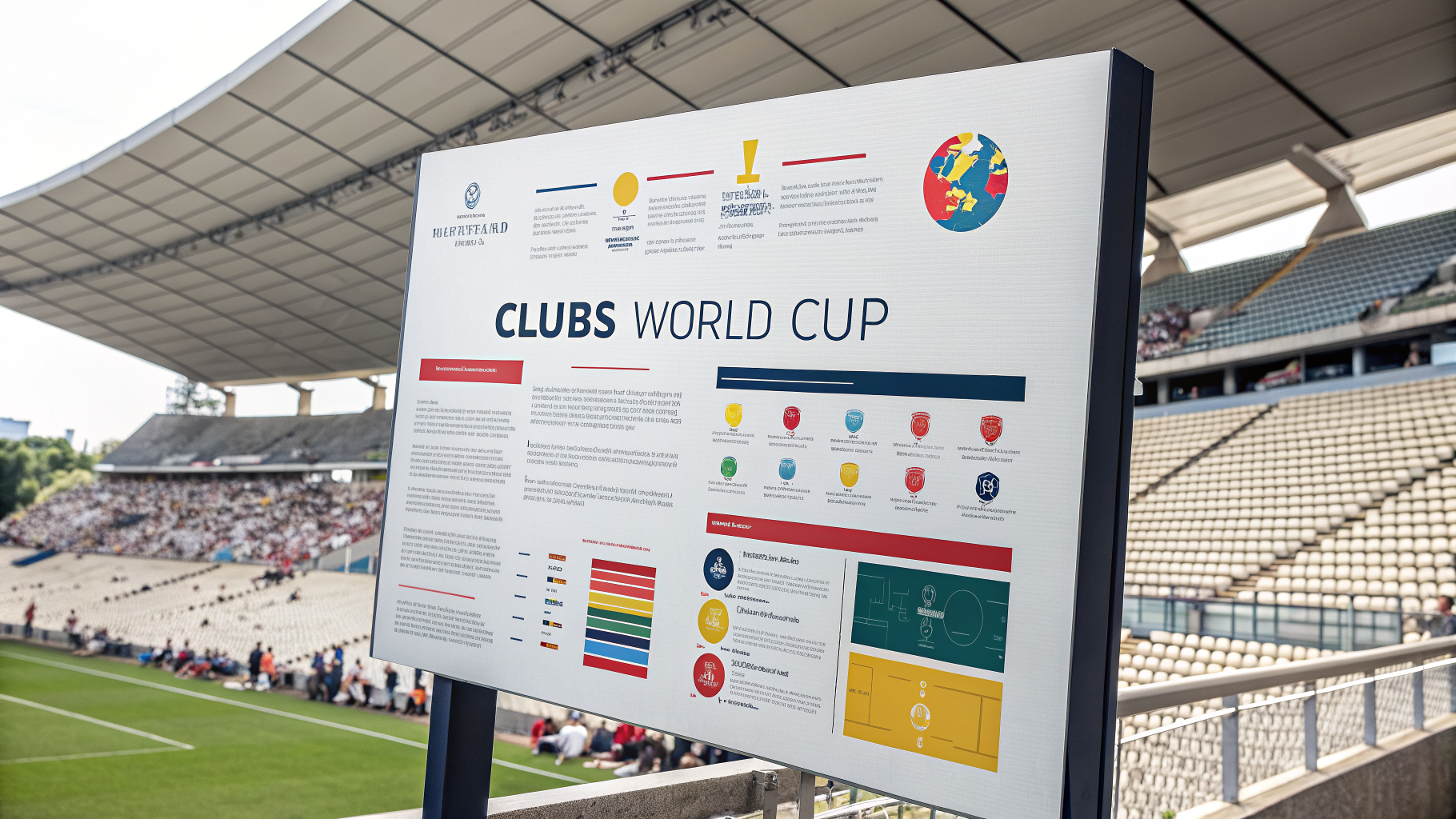
The clubs world cup has historically been a seven-team tournament played annually, typically featuring the winners of each continental competition plus the host nation’s league champion. The new format, approved by the FIFA Council in 2024, represents a radical departure. The competition now takes place every four years, starting in 2025, and includes 32 clubs divided into eight groups of four. The top two teams from each group advance to a knockout stage, culminating in a final to determine the world champion.
This structural change was designed to create a more prestigious and commercially viable event. FIFA President Gianni Infantino stated that the new tournament “will be the pinnacle of elite professional men’s club football, and it will be an open competition climaxing in a showpiece final to crown the best men’s football club in the world” (FIFA, 2024)[5]. The tournament is scheduled to be played during the northern hemisphere summer, occupying a slot previously filled by international friendlies and pre-season tours. The 2025 edition was staged in the United States from 14 June to 13 July 2025, lasting 30 days (FIFA, 2025)[6].
The group stage format is familiar to fans of the FIFA World Cup, providing a clear and accessible structure. Each group winner and runner-up progresses to a round of 16, followed by quarter-finals, semi-finals, and a final. This format reduces the number of matches from the previous annual format but dramatically increases the quality and intensity of each fixture. The tournament now offers a genuine test of squad depth and tactical adaptability over a concentrated period, similar to a major international tournament.
Qualification Pathways and Slot Allocation
Qualification for the clubs world cup is based on performance in continental club competitions. The allocation of the 32 slots reflects the relative strength and development of each confederation. European clubs (UEFA) receive the largest allocation with 12 of the 32 total slots (FIFA, 2024)[2]. South American clubs (CONMEBOL) have 6 of the 32 places (FIFA, 2024)[7]. Africa (CAF), Asia (AFC), and North/Central America & Caribbean (Concacaf) each receive 4 club slots, while Oceania (OFC) receives 1 slot and the host nation receives 1 slot (FIFA, 2024)[8].
For UEFA and CONMEBOL, qualification is primarily determined by performance in the UEFA Champions League and Copa Libertadores over a four-year cycle. The winners of these competitions earn automatic berths, with additional slots awarded to the highest-ranked clubs based on a coefficient system. This approach ensures that the most consistent and successful clubs from the strongest leagues are represented. For other confederations, qualification is typically determined by winning the continental championship in the year preceding the tournament.
This expanded and structured qualification system is designed to increase global representation and competitiveness. Arsène Wenger, FIFA’s Chief of Global Football Development, noted that the expanded format “will accelerate the development of club football outside Europe by giving more clubs from every confederation regular exposure to the highest level of competition and the revenues that come with it” (FIFA, 2024)[9]. The system rewards sustained excellence rather than a single season’s performance, particularly for European and South American clubs.
Financial Implications and Revenue Potential
The financial scale of the new clubs world cup is unprecedented for a club competition. The inaugural 32-team tournament is projected by FIFA to generate around USD 4 billion in global media and commercial revenues over its cycle (FIFA, 2024)[3]. A Deloitte Sports Business Group analysis estimated that participating clubs in the 2025 edition could collectively earn over USD 2.5 billion in prize money and associated revenues (Deloitte Sports Business Group, 2024)[10]. These figures dwarf the prize money from the previous annual format, where total distributed prize money across participating clubs surpassed USD 20 million per tournament (FIFA, 2023)[11].
The revenue distribution model is critical to the tournament’s appeal. Clubs are expected to receive substantial participation fees, performance bonuses, and a share of the commercial pool. This financial injection is particularly significant for clubs from less wealthy confederations, providing resources that can be invested in infrastructure, youth development, and squad improvement. The projected revenues also make the tournament a highly attractive proposition for broadcasters and sponsors, securing the long-term viability of the competition.
However, the financial concentration also raises concerns. The largest share of revenue is likely to flow to European clubs, who already dominate the global football economy. Critics argue that this could widen the gap between European and non-European clubs, despite the stated goal of promoting global development. The success of the revenue-sharing model in achieving equitable distribution will be a key measure of the tournament’s impact on the broader football ecosystem. FIFA has committed to reinvesting a significant portion of the revenue into football development programs worldwide.
The Impact on Global Club Football Development
The new clubs world cup is intended to serve as a catalyst for the development of club football across all confederations. By guaranteeing regular participation for clubs from Africa, Asia, and the Americas, the tournament provides a platform for these teams to compete against the best in the world. This exposure can accelerate tactical development, raise competitive standards, and increase the global profile of players and clubs from emerging football nations. The format also creates a clear pathway for clubs to measure their progress against a consistent benchmark.
Pep Guardiola, manager of Manchester City, emphasised the unique value of the competition: “When you win the Club World Cup you can say you are the best team in the world for that year. For the players and for the club, that is something very special and it only comes around if you have been exceptional in your own continent” (ESPN, 2023)[12]. This sentiment is echoed by Carlo Ancelotti, who noted that the tournament “tells you who is the best team in the world at that moment” (FIFA, 2023)[13]. The quadrennial format adds to the prestige, making each edition a landmark event in the global football calendar.
Beyond the competitive aspect, the tournament has the potential to drive significant investment in club infrastructure and youth academies in developing regions. The financial rewards and global exposure can attract sponsors and investors to clubs that previously operated on limited budgets. Furthermore, the tournament’s scheduling in the summer, outside the traditional European season, reduces fixture congestion and allows clubs to prepare properly. The long-term success of the competition will depend on its ability to maintain competitive balance and fan engagement across all participating markets.
Important Questions About Clubs World Cup
How does the new clubs world cup format differ from the old one?
The old clubs world cup was an annual tournament featuring seven teams: the winners of each of the six continental club competitions plus the host nation’s league champion. It was typically played over a week in December or February. The new format, which began in 2025, is a quadrennial tournament with 32 teams divided into eight groups of four. It lasts approximately one month and is played in the summer. The expanded format mirrors the structure of the FIFA World Cup, with a group stage followed by a knockout phase.
Which clubs have qualified for the 2025 clubs world cup?
The 2025 clubs world cup featured 32 clubs from all six confederations. UEFA (Europe) had 12 slots, CONMEBOL (South America) had 6 slots, and CAF (Africa), AFC (Asia), and Concacaf (North and Central America) each had 4 slots. OFC (Oceania) had 1 slot, and the host nation (United States) had 1 slot. The specific clubs were determined by performance in continental competitions over a four-year cycle, with winners of the UEFA Champions League and Copa Libertadores receiving automatic berths. For example, Chelsea became the inaugural champions of the expanded 32-team tournament in 2025 (FIFA, 2025)[14].
How much prize money is available in the new clubs world cup?
The financial stakes for the new clubs world cup are significantly higher than the previous format. The tournament is projected to generate around USD 4 billion in media and commercial revenues over its cycle (FIFA, 2024)[3]. A Deloitte analysis estimated that participating clubs could collectively earn over USD 2.5 billion in prize money and associated revenues (Deloitte Sports Business Group, 2024)[10]. This represents a dramatic increase from the previous format, where total distributed prize money per edition exceeded USD 20 million (FIFA, 2023)[11]. The exact distribution model for prize money and participation fees has not been fully disclosed.
What is the schedule for future editions of the clubs world cup?
The new clubs world cup is scheduled to be held every four years, with the first edition taking place in the United States in 2025. The tournament ran from 14 June to 13 July 2025 (FIFA, 2025)[6]. Future editions are expected to follow a similar quadrennial cycle, with the next tournament tentatively scheduled for 2029. The host nation for the 2029 edition has not yet been announced by FIFA. The summer scheduling is designed to minimise conflict with domestic league seasons, particularly in Europe, and to allow for a concentrated tournament format similar to the FIFA World Cup.
Comparison of Old vs. New Tournament Formats
The transition from the annual seven-team clubs world cup to the quadrennial 32-team format represents a fundamental shift in the competition’s structure and purpose. The following table outlines the key differences between the two formats.
| Aspect | Old Format (2000-2023) | New Format (2025 onward) |
|---|---|---|
| Frequency | Annual | Quadrennial (every four years) |
| Number of Teams | 7 | 32 |
| Format | Knockout tournament with one group stage | Group stage (8 groups of 4) followed by knockout |
| Duration | ~7-10 days | ~30 days |
| Timing | December/February | June/July |
| Revenue Potential | Tens of millions USD | Billions USD |
Practical Tips for Following the Tournament
To get the most out of the new clubs world cup, fans should familiarise themselves with the expanded format and the qualification pathways for their preferred clubs. Understanding which confederation slots are available and how clubs qualify through continental competitions is key to tracking potential participants. The quadrennial nature of the tournament means that each edition is a major event, so planning ahead for match schedules and broadcast details is worthwhile.
For those interested in the broader implications, following the financial developments and revenue distribution models provides insight into the tournament’s impact on global football economics. The competition also offers a unique opportunity to watch clubs from different continents compete, showcasing diverse playing styles and tactical approaches. Fans can explore related content on tshirtinsight.com for detailed guides on tournament structures and team histories. Additionally, the official FIFA website provides comprehensive information on match schedules, team profiles, and ticketing.
Staying updated through reputable football news sources and official social media channels ensures access to real-time information. The tournament’s summer scheduling means it does not clash with major domestic league fixtures, allowing fans to focus entirely on this global competition. For deeper analysis, consider following tactical breakdowns from football analysts who specialise in international club competitions.
Key Takeaways
The clubs world cup has entered a new era with its expansion to a 32-team quadrennial format. This transformation elevates the competition to a level comparable to the FIFA World Cup, offering unprecedented financial rewards, global exposure, and competitive prestige. The new structure provides a clear and exciting pathway to determine the best club in the world every four years, while also promoting the development of club football across all confederations. The success of the 2025 edition in the United States will set the template for future tournaments. To stay informed about the latest developments in international club football, explore the comprehensive guides and analyses available on tshirtinsight.com.
Further Reading
- FIFA Club World Cup 2025 overview. FIFA.
https://www.fifa.com/en/tournaments/mens/club-world-cup/usa-2025 - FIFA Council approves key details of the FIFA Club World Cup 2025™. FIFA.
https://www.fifa.com/about-fifa/organisation/media-releases/fifa-council-approves-key-details-of-the-fifa-club-world-cup-2025 - FIFA Council unanimously approves key decisions on the future of men’s and women’s competitions. FIFA.
https://www.fifa.com/about-fifa/organisation/media-releases/fifa-council-unanimously-approves-key-decisions-on-the-future-of-mens-and-womens-competitions - Real Madrid extend record FIFA Club World Cup title haul. FIFA.
https://www.fifa.com/en/tournaments/mens/club-world-cup/morocco2022/news/real-madrid-extend-record-fifa-club-world-cup-title-haul - FIFA Council unanimously approves key decisions on the future of men’s and women’s competitions. FIFA.
https://www.fifa.com/about-fifa/organisation/media-releases/fifa-council-unanimously-approves-key-decisions-on-the-future-of-mens-and-womens-competitions - FIFA Club World Cup 2025 tournament details. FIFA.
https://www.fifa.com/en/tournaments/mens/club-world-cup/usa-2025 - FIFA Council approves key details of the FIFA Club World Cup 2025™. FIFA.
https://www.fifa.com/about-fifa/organisation/media-releases/fifa-council-approves-key-details-of-the-fifa-club-world-cup-2025 - FIFA Club World Cup 2025 overview. FIFA.
https://www.fifa.com/en/tournaments/mens/club-world-cup/usa-2025 - Wenger: New Club World Cup can be a catalyst for global club development. FIFA.
https://www.fifa.com/football-development/news/wenger-new-club-world-cup-can-be-a-catalyst-for-global-club-development - Financial implications of the expanded FIFA Club World Cup 2025. Deloitte Sports Business Group.
https://www2.deloitte.com/uk/en/pages/sports-business-group/articles/financial-implications-of-the-expanded-fifa-club-world-cup-2025.html - FIFA Club World Cup Morocco 2022 prize money distribution. FIFA.
https://www.fifa.com/tournaments/mens/club-world-cup/morocco2022/news/fifa-club-world-cup-morocco-2022-prize-money-distribution - Guardiola: Club World Cup final is a chance to make history for Manchester City. ESPN.
https://www.espn.com/soccer/story/_/id/39001750/pep-guardiola-manchester-city-chance-history-fifa-club-world-cup - Ancelotti: Real Madrid aim to confirm world dominance. FIFA.
https://www.fifa.com/fifaplus/en/articles/ancelotti-real-madrid-fifa-club-world-cup-morocco-2022 - Chelsea win inaugural 32-team FIFA Club World Cup. FIFA.
https://www.fifa.com/en/tournaments/mens/club-world-cup/usa-2025/news/chelsea-win-inaugural-32-team-fifa-club-world-cup
For more about Hello world, see Hello World.