
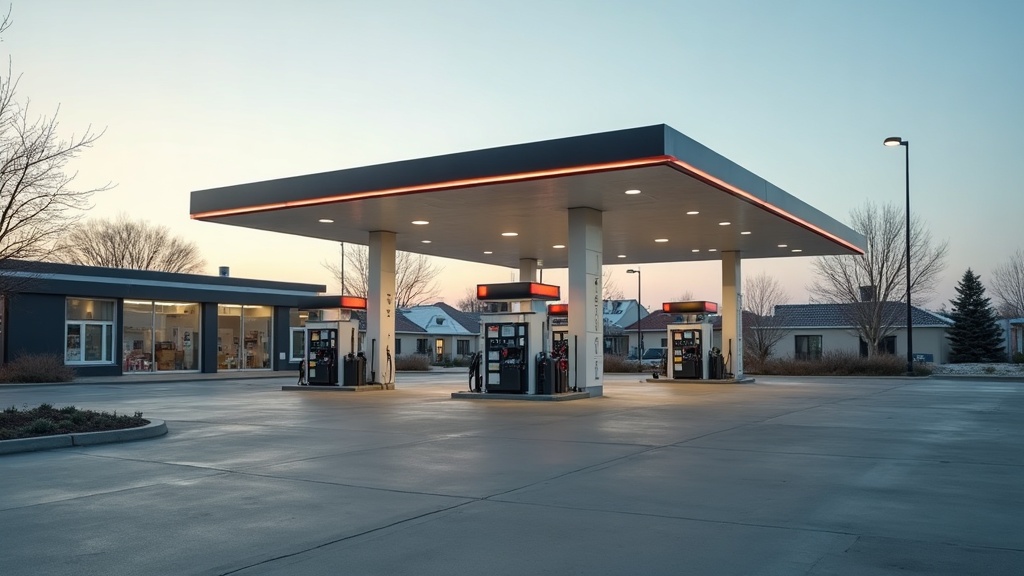
How to Find the Best Gas Station Near Me in 2025
Finding a reliable and affordable gas station near me is a common daily need for millions of drivers. With fluctuating fuel prices and varying station amenities, knowing how to choose the right stop can save you time and money. This guide explores the modern landscape of fueling up, from digital tools to the evolving services at your local pump.
Table of Contents
- The Modern Quest for a Gas Station Near Me
- What Drives Your Choice of Fuel Stop
- The Evolution of the Neighborhood Gas Station
- Practical Strategies for Saving at the Pump
- Frequently Asked Questions
- Comparison: Finding Your Fuel Stop
- Practical Tips for a Better Fueling Experience
- Key Takeaways
- Useful Resources
Quick Summary: A gas station near me is no longer just a place to buy fuel; it has evolved into a convenience hub. This article explains how to use digital tools to find the best prices, the key factors influencing your choice, and the future of the local fueling station. Learn how to make smarter, more informed stops.
By the Numbers
- The average U.S. driver lives within 3 miles of a fueling outlet (NACS, 2024)[1].
- There are approximately 145,000 fueling outlets across the United States (NACS State of the Industry, 2025)[2].
- In a 2025 survey, 83% of U.S. drivers reported using a smartphone app to find a gas station or compare prices (GasBuddy, 2025)[3].
- 76% of U.S. adults said gas price was the primary factor in choosing a station (AAA, 2024)[4].
The Modern Quest for a Gas Station Near Me
Finding a gas station near me has been transformed by technology. The days of relying solely on memory or driving until you spot a sign are largely over. As Patrick De Haan, Head of Petroleum Analysis at GasBuddy, noted, “More than 80 percent of drivers now use a smartphone to help decide where to buy gas, and they’re increasingly prioritizing stations that clearly display real‑time prices and amenities” (GasBuddy, 2025)[3]. This digital shift gives consumers unprecedented power to find the best deal.
Several apps and websites specialize in aggregating real-time fuel prices. Platforms like GasBuddy, Waze, and Google Maps allow users to search for a gas station near me and instantly see the price per gallon reported by other drivers. This crowdsourced data is often updated within minutes, providing a significant advantage over static price boards. The ability to compare prices before even leaving your driveway can lead to substantial savings over a year.
However, price isn’t the only factor. The same digital tools now provide details on amenities. Many apps allow users to filter results based on whether a station has a car wash, a convenience store with a good coffee selection, or an air pump for tires. This level of detail helps drivers make a holistic decision, balancing cost with convenience. For instance, a slightly higher price might be acceptable if the station is on the correct side of the road and offers a clean restroom, a factor that 54% of drivers say influences their choice (NACS, 2024)[5].
It is also important to leverage the tools offered by your vehicle’s own navigation system. Many modern cars have integrated fuel price finders that can locate the cheapest gas station near me along your route. This hands-free approach is not only convenient but also safer, allowing you to keep your focus on the road while your car’s computer does the searching. Using these integrated systems can simplify the process of making a quick, informed stop.
The Importance of Location and Real-Time Data
Location remains a critical element. As Andrew Gross from AAA National Office stated, “Location remains the single biggest factor in the price drivers pay at the pump, which is why consumers often see wide variations among gas stations even within the same city” (AAA, 2025)[4]. A station on a busy highway intersection may have higher prices than one just a block away on a quieter street. Real-time data helps you find that hidden gem. Furthermore, understanding traffic patterns can help you avoid stations that are difficult to enter or exit, saving you time and frustration.
What Drives Your Choice of Fuel Stop
When searching for a gas station near me, several factors beyond price come into play. The most obvious is fuel price, which AAA found is the primary factor for 76% of U.S. adults[4]. However, the modern gas station is increasingly a convenience store that sells fuel. As Jeff Lenard from NACS explained, “Today’s gas station is really a convenience store that happens to sell fuel, and the inside store often provides the majority of a location’s profits” (NACS, 2025)[6]. This means the quality of the in-store experience is a major consideration.
Cleanliness and safety are paramount. A well-lit station with a clean forecourt and restroom is often preferred, especially for families or late-night travelers. The availability of services like air and water for tires is another practical concern. Drivers with electric vehicles are now also looking for stations that combine traditional fuel with EV charging. As of early 2025, more than 70% of public DC fast-charging ports were located at sites that also sold gasoline (U.S. Department of Energy, 2025)[7], making these hybrid locations a one-stop shop for all vehicle types.
Brand loyalty also plays a role, but it is often secondary to price and location. Some drivers prefer specific brands due to perceived fuel quality or rewards programs. Many major chains offer loyalty points that can be redeemed for discounts on fuel or in-store items. For frequent travelers, these programs can add up to significant savings. However, the most important factor remains the combination of a competitive price and the convenience of the location relative to your route.
Finally, payment method is a growing consideration. Roughly 65% of fuel purchases are made with a credit or debit card (Federal Reserve, 2024)[8]. Some stations offer a discount for paying with cash, which can be a viable option for saving a few cents per gallon. It’s worth checking the payment policies of your chosen gas station near me before you arrive, as this can influence the final price you pay at the pump.
The Evolution of the Neighborhood Gas Station
The gas station near me is undergoing a significant transformation. Mike O’Connor, President and CEO of the Petroleum Marketers Association of America, highlighted its central role: “For most Americans, the local gas station is not just where they fuel up, it’s also their most frequent point of contact with the nation’s fuel supply chain and often the closest retail business to home or work” (PMAA, 2025)[9]. This evolution is driven by changing consumer habits and the energy transition.
The rise of electric vehicles is a primary catalyst for change. As Ramanan Krishnamoorti from the University of Houston noted, “As electric vehicles grow, the neighborhood gas station is evolving into a broader ‘energy station,’ adding fast chargers and alternative fuels alongside traditional gasoline and diesel” (University of Houston, 2025)[10]. This means the same location that serves a gasoline-powered SUV might also provide a 20-minute fast charge for an electric sedan. For the consumer, this creates a more versatile and future-proof stop.
Inside the store, the transformation is equally dramatic. The traditional gas station is now a sophisticated convenience store offering fresh food, premium coffee, and even grocery items. This shift is a direct response to the fact that the inside store provides the majority of a location’s profits. For the driver looking for a quick snack or a meal on the go, the modern gas station near me is often a better option than a fast-food drive-through, offering healthier choices and faster service.
This evolution also includes a greater focus on sustainability. Many new stations are being built with solar panels, energy-efficient lighting, and systems to capture stormwater runoff. Some are even experimenting with hydrogen fueling. For the environmentally conscious driver, choosing a station that invests in these technologies is a way to align their fueling habits with their values. The local gas station is becoming a microcosm of the broader energy transition, adapting to serve a new generation of mobility.
Practical Strategies for Saving at the Pump
Knowing how to search for a gas station near me is only half the battle. Implementing smart strategies can maximize your savings. First, always use a price comparison app before you need fuel. Checking prices when your tank is still half full gives you the flexibility to drive to the cheapest station, rather than being forced to stop at the first one you see. This proactive approach can save you 10 to 20 cents per gallon.
Second, understand the psychology of gas pricing. Stations near highway exits or in affluent neighborhoods often have higher prices. A station just a few blocks off the main road or in a less busy area can be significantly cheaper. Don’t be afraid to explore side streets in a safe area to find a better deal. The average U.S. driver lives within three miles of a fueling outlet[1], so there is almost certainly a cheaper option nearby.
Third, leverage loyalty programs and credit card rewards. Many gas station chains offer a free loyalty card that provides a small discount per gallon. Some credit cards offer cashback on fuel purchases, often up to 5%. Combining a station’s loyalty discount with a cashback credit card can lead to substantial savings over time. However, always pay off your balance in full to avoid interest charges that negate any savings.
Fourth, consider the time of day you fill up. While the evidence is mixed, some studies suggest that buying gas in the morning, when the ground temperature is cooler, can give you slightly more fuel for your money because gasoline expands in heat. While the difference is minimal, every little bit helps. More importantly, avoid buying gas during peak travel times, such as Friday afternoons, when prices are often at their weekly high.
Important Questions About Gas Station Near Me
How can I find the cheapest gas station near me right now?
The most effective way is to use a real-time fuel price app like GasBuddy, Waze, or AAA’s TripTik. These platforms rely on user-reported prices and are updated frequently. Simply open the app, allow it to use your location, and it will display a map of nearby stations with their current prices. You can sort by price or distance to find the best option. Many apps also allow you to filter by fuel grade or amenities.
What should I look for besides the price of gas?
While price is the top factor for most drivers, other considerations include the cleanliness of the station, the availability of a working air pump for tires, the quality of the convenience store, and the safety of the location. If you have an electric vehicle, you’ll want to check for available charging ports. Also, consider the ease of entry and exit from the station, especially if you are towing a trailer or driving a large vehicle.
Are gas station loyalty programs worth it?
Yes, for regular drivers at a particular chain, loyalty programs can be very worthwhile. They typically offer a few cents off per gallon, which can add up to significant savings over a year. Many programs also offer rewards on in-store purchases. If you frequently pass by a specific brand’s station, it is worth signing up for their free loyalty program. Combining this with a credit card that offers cashback on gas can further increase your savings.
How is the rise of electric vehicles changing gas stations?
The traditional gas station is evolving into an “energy station.” Many are adding DC fast-charging ports for electric vehicles, allowing drivers of both gas and electric cars to use the same location. This is convenient for consumers and helps future-proof the business. Inside, the convenience store is becoming more important as a profit center, offering higher-quality food and drinks to cater to the longer dwell times of EV drivers who need 20-30 minutes to charge.
Comparison: Finding Your Fuel Stop
When you need to stop for fuel, you generally have two main approaches: relying on memory and visual cues or using digital tools. The choice between them depends on your priorities for time, cost, and convenience. The table below outlines the key differences.
| Method | Primary Focus | Best For |
|---|---|---|
| Visual Search / Memory | Speed and proximity | When you are low on fuel and need the closest option immediately. It prioritizes convenience over price. |
| Smartphone App (e.g., GasBuddy) | Price optimization and amenities | When you have a quarter tank or more and can afford to drive a few extra minutes to save money. It prioritizes cost efficiency and desired services. |
| Vehicle Navigation System | Route integration and safety | During long trips when you want to plan a stop without looking at your phone. It balances convenience, price, and route efficiency. |
Practical Tips for a Better Fueling Experience
To make your search for a gas station near me more effective, consider these actionable tips. First, always keep your tank at least a quarter full. This gives you the flexibility to seek out the best price rather than being forced to stop at the first station you see. It also prevents you from running out of fuel in an unsafe or inconvenient location.
Second, check your vehicle’s tire pressure regularly. Properly inflated tires improve fuel economy, meaning you get more miles per gallon and need to stop for fuel less often. This is a simple maintenance task that can save you money and time. Third, take advantage of grocery store fuel points. Many supermarket loyalty programs allow you to earn discounts on fuel based on your grocery spending. This is a great way to combine everyday shopping with fuel savings.
Finally, be aware of the fuel grade your vehicle requires. Using premium fuel in a car that only needs regular is a waste of money. Check your owner’s manual to confirm the recommended octane rating. Sticking to the manufacturer’s recommendation is the most cost-effective and efficient way to fuel your vehicle. For more insights on automotive and lifestyle topics, explore the range of articles available on our website.
Key Takeaways
Finding the ideal gas station near me is a blend of using modern technology and understanding the factors that influence price and convenience. By leveraging real-time price apps, considering the full range of amenities, and adopting smart fueling habits, you can save money and time. The local gas station is more than just a pump; it is a vital community hub that is adapting to the future of transportation. Explore more guides and insights on TshirtInsight to stay informed about the trends shaping our daily lives.
Useful Resources
- NACS. Scope of the Industry.
https://www.convenience.org/Research/FactSheets/Scope-of-the-Industry - NACS State of the Industry.
https://www.convenience.org/Research/FactSheets/NACS-State-of-the-Industry - GasBuddy. GasBuddy 2025 annual pump habits survey.
https://www.gasbuddy.com/press-releases/gasbuddy-2025-pump-habits-survey - AAA. AAA Gas Price Sentiment Survey.
https://newsroom.aaa.com/2024/08/aaa-gas-price-sentiment-survey/ - NACS. How Consumers Choose Stores.
https://www.convenience.org/Research/Consumer-Insights/How-Consumers-Choose-Stores - NACS. How convenience stores compete in a changing fuel market.
https://www.convenience.org/Media/Daily/2025/Feb/4/1-How-C-Stores-Compete - U.S. Department of Energy, Alternative Fuels Data Center.
https://afdc.energy.gov/fuels/electricity-charging-stations - Federal Reserve. Diary of Consumer Payment Choice.
https://www.federalreserve.gov/paymentsystems/diary-of-consumer-payment-choice-2024.htm - PMAA. PMAA testimony on the role of fuel marketers in U.S. transportation.
https://www.pmaa.org/docs/transportation-infrastructure-testimony-2025.pdf - University of Houston. What the energy transition means for your local gas station.
https://uh.edu/uh-energy/news/2025/energy-transition-gas-stations
For more about Golf courses near me, see Golf Courses Near Me.