
Best ecommerce jewelry store explained: key traits that drive success
The best ecommerce jewelry store combines high-quality product imagery, mobile optimization, trust signals, and emotional storytelling to convert browsers into buyers. This article explains what makes a jewelry store thrive online, covering design, customer experience, and technology trends that set top performers apart.
Table of Contents
- The Visual Experience: Why Imagery Defines the Best Ecommerce Jewelry Store
- Building Trust Through Transparency and Service
- Mobile Optimization: Capturing the Smartphone Shopper
- Technology and Trends Shaping Online Jewelry Retail
- Frequently Asked Questions
- Comparison: Key Features of Top Jewelry Stores
- Practical Tips for Optimizing Your Jewelry Store
- Final Thoughts on Best Ecommerce Jewelry Store Explained
- Further Reading
Market Snapshot
- Global online jewelry sales are expected to reach 117 billion US dollars by 2027, up from an estimated 76 billion US dollars in 2024 (Statista, 2025)[1]
- Mobile devices account for approximately 69 percent of traffic to fashion and jewelry ecommerce sites globally (Similarweb, 2025)[4]
- Cart abandonment rates for online jewelry and luxury goods retailers average 77 percent (Baymard Institute, 2025)[7]
- Sustainable and ethically sourced jewelry now represents approximately 20 percent of online jewelry revenue worldwide (BCG, 2025)[10]
The best ecommerce jewelry store explained here is not just about selling rings and necklaces online. It is about recreating the tactile, emotional experience of a physical jewelry counter in a digital environment. As Roxanne Meyer, Equity Research Analyst at UBS, notes, “Jewelry is one of the most emotionally driven categories in e-commerce, so the best-performing online jewelry retailers are those that recreate the in-store storytelling, trust, and service experience digitally”[q1]. With the global online jewelry market projected to grow at a compound annual growth rate (CAGR) of 8.4 percent between 2024 and 2029[2], understanding what separates average stores from exceptional ones is critical for anyone entering this space.
The Visual Experience: Why Imagery Defines the Best Ecommerce Jewelry Store
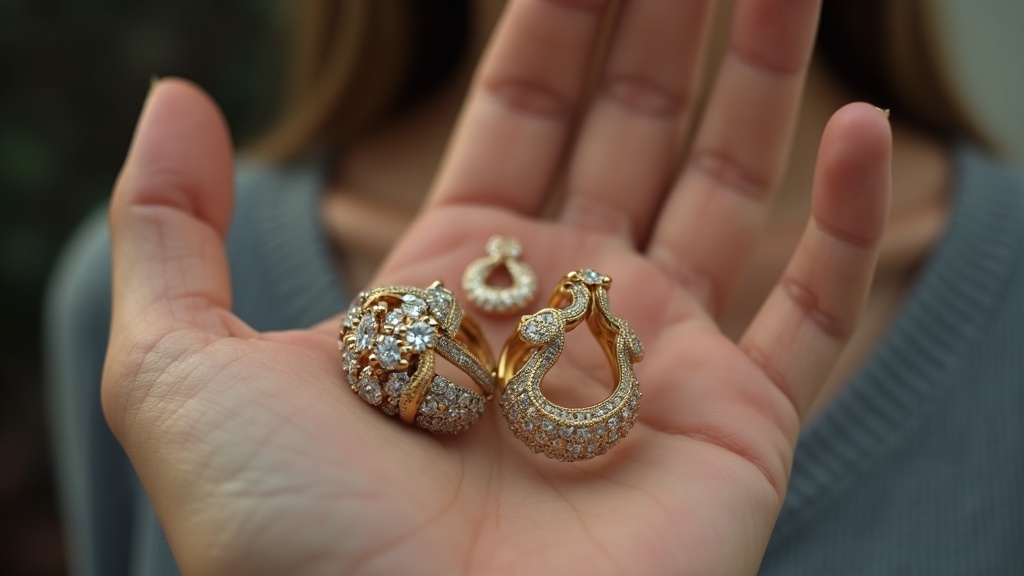
In the context of an ecommerce jewelry store, the product image is the single most powerful sales tool. Unlike clothing or electronics, jewelry requires close examination of shine, texture, and detail. According to Narvar, roughly 41 percent of online jewelry shoppers say that detailed product imagery, including zoom and 360-degree views, is the single most important factor in their purchase decision[8]. This means that a store must invest in high-resolution photography, multiple angles, and lifestyle shots that show the piece in use.
The Role of Video and 3D Views
Static images alone are no longer sufficient. Kanupriya Verma, Senior Industry Manager at Google, states, “For jewelry retailers, investing in rich product imagery, 3D views, and short-form video is no longer optional – these are now baseline expectations for what consumers consider a best-in-class e-commerce jewelry experience”[q5]. Adding video clips that show a necklace catching light or a bracelet moving on a wrist can dramatically increase engagement. Furthermore, customer reviews with photos can increase conversion rates on jewelry product pages by up to 25 percent compared with text-only reviews[6]. This user-generated content builds authenticity that polished brand photography alone cannot match.
For a store like best friend jewelry in sterling silver, which specializes in meaningful, personalized pieces, showing the quality of the silver and the precision of engravings through detailed visuals is essential. The best ecommerce jewelry store explained here treats every product page as a digital storefront where lighting, background, and zoom capability replicate the in-hand experience.
Building Trust Through Transparency and Service
Trust is the currency of high-consideration purchases like jewelry. Alex Genov, Head of Customer Research at Zappos, explains, “For online jewelry, trust markers such as detailed product information, reviews with photos, and clear return policies can be more influential on conversion than an additional discount”[q3]. The best ecommerce jewelry store makes trust visible from the first click. This includes prominently displaying material certifications (e.g., sterling silver 925, 14k gold), offering a clear and fair return policy, and providing multiple customer service channels including live chat.
Customer Reviews and Social Proof
Reviews are not just about star ratings. Detailed reviews that describe the fit, feel, and emotional impact of a piece help other shoppers envision themselves wearing it. Stores that encourage photo reviews see higher conversion rates, as noted earlier. Additionally, featuring testimonials on category pages or the homepage can reduce hesitation. Deborah Weinswig, CEO of Coresight Research, notes, “What separates the top jewelry e-commerce players is not just assortment, but how effectively they use content, community, and services like virtual consultations to move customers from inspiration to purchase”[q4]. A live chat option or a phone number that is easy to find can be the difference between a sale and an abandoned cart.
Transparency also extends to shipping and returns. With an average cart abandonment rate of 77 percent for jewelry retailers[7], offering free shipping, easy returns, and a satisfaction guarantee can recover lost sales. The best ecommerce jewelry store explained here prioritizes customer confidence over short-term margins.
Mobile Optimization: Capturing the Smartphone Shopper
David Marquart, Industry Analyst at Statista, observes, “The best-positioned e-commerce jewelry stores today combine high visual merchandising standards with frictionless mobile checkout, because more than two-thirds of jewelry e-commerce traffic now originates on smartphones”[q2]. With 69 percent of traffic to fashion and jewelry sites coming from mobile devices[4], a store that is not fully optimized for mobile is effectively closed to the majority of its potential customers.
Key Mobile UX Elements
Mobile optimization goes beyond responsive design. It includes touch-friendly navigation, fast loading times, and a streamlined checkout process. The average conversion rate for jewelry and luxury accessories sites is around 1.7 percent[5], so every second of load time matters. On mobile, product images must still be zoomable, and the checkout should offer Apple Pay, Google Pay, or similar one-click options. Additionally, the search bar should be prominent, and filters for metal type, gemstone, price range, and style must be easy to use on a small screen.
For a niche store like a silver cat jewelry guide, which may appeal to a specific audience, ensuring that mobile users can quickly find and purchase cat-themed pendants or rings is crucial. The best ecommerce jewelry store explained here treats mobile not as an afterthought but as the primary platform for discovery and purchase.
Technology and Trends Shaping Online Jewelry Retail
Emerging technologies are redefining what consumers expect from an ecommerce jewelry store. Augmented reality (AR) and virtual try-on tools are moving from novelty to necessity. Approximately 32 percent of luxury and jewelry ecommerce customers have used virtual try-on or AR tools[9]. These tools allow shoppers to see how a ring looks on their finger or how a necklace sits on their neckline without leaving home. For high-value items, this reduces hesitation and returns.
Sustainability and Ethical Sourcing
Another major trend is the demand for sustainable and ethically sourced jewelry. This segment now represents approximately 20 percent of global online jewelry revenue[10]. Consumers are increasingly asking about the origin of materials, whether diamonds are conflict-free, and if metals are recycled. The best ecommerce jewelry store explains these details clearly on product pages, often with a dedicated sustainability section. This transparency not only builds trust but also appeals to a growing demographic of conscious consumers.
Personalization is also on the rise. From engraved name necklaces to birthstone rings, customizable products allow shoppers to create something unique. Stores that offer easy-to-use customization tools, previews of the final product, and clear timelines for production stand out. As the market grows, the best ecommerce jewelry store explained here will be the one that adapts quickly to these technological and social shifts.
Important Questions About Best Ecommerce Jewelry Store Explained
What is the single most important feature of a successful ecommerce jewelry store?
The most important feature is high-quality, detailed product imagery. According to Narvar, 41 percent of online jewelry shoppers rank detailed imagery, including zoom and 360-degree views, as the most important purchase factor[8]. Without clear, visually compelling photos, even the best jewelry will fail to convert online. Combine this with video content and user-generated review photos for maximum impact.
How can I reduce cart abandonment in my jewelry store?
With an average cart abandonment rate of 77 percent for jewelry retailers[7], strategies include offering free shipping, a clear and generous return policy, and multiple payment options. Additionally, sending an abandoned cart email reminder with a small incentive, such as 10 percent off, can recover lost sales. Trust signals like security badges and customer service chat also help.
Is mobile optimization really necessary for a jewelry ecommerce site?
Yes, absolutely. Mobile devices account for 69 percent of traffic to fashion and jewelry ecommerce sites[4]. A site that is not fully optimized for mobile will lose the majority of its potential customers. This means fast loading times, touch-friendly navigation, zoomable images, and one-click checkout options like Apple Pay or Google Pay.
What role does sustainability play in online jewelry sales?
Sustainability is increasingly important. Ethically sourced and sustainable jewelry now represents about 20 percent of global online jewelry revenue[10]. Consumers want to know that their purchase aligns with their values. Clearly communicating your sourcing practices, using recycled metals, and offering conflict-free diamonds can differentiate your store and attract conscious buyers.
Comparison: Key Features of Top Jewelry Stores
To better understand what sets the best ecommerce jewelry store apart, the table below compares four critical features across average and top-performing stores. These factors directly influence conversion rates, customer trust, and repeat business.
| Feature | Average Store | Top-Performing Store |
|---|---|---|
| Product Imagery | 2–3 static photos | Multiple angles, 360-degree view, video |
| Mobile Experience | Responsive but slow | Fast, touch-optimized, one-click checkout |
| Trust Signals | Basic return policy | Reviews with photos, live chat, certifications |
| Technology Adoption | No AR or personalization | Virtual try-on, customization tools |
Practical Tips for Optimizing Your Jewelry Store
To build a successful ecommerce jewelry store, focus on these actionable strategies. First, invest in professional product photography that includes macro shots, lifestyle images, and short video clips. Second, optimize every page for mobile – test your site on actual smartphones and ensure the checkout process takes fewer than three taps. Third, build trust by displaying customer reviews with photos, clearly stating your material certifications, and offering a no-questions-asked return policy within 30 days.
Fourth, leverage user-generated content. Encourage customers to share photos of their purchases on social media and feature these on your site. Fifth, consider offering a virtual try-on feature if your budget allows, as 32 percent of jewelry shoppers have used such tools[9]. Finally, communicate your sustainability efforts. Even if you start small, such as using recycled packaging, make it visible. For inspiration on a specific niche, explore the best crypto app article for ideas on how to present complex information clearly.
For more about Best friend jewelry gold, see find best friend jewelry gold resources.
Final Thoughts on Best Ecommerce Jewelry Store Explained
The best ecommerce jewelry store explained in this article is one that combines stunning visuals, ironclad trust signals, mobile-first design, and forward-looking technology. With the market projected to reach 117 billion US dollars by 2027[1], the opportunity is enormous. By focusing on these four pillars, any jewelry retailer can build a store that not only attracts visitors but converts them into loyal customers. To start improving your own store, review your product pages today and ensure they meet the standards outlined here. For more insights on jewelry trends, check out the best friend jewelry in sterling silver collection for an example of a well-executed online jewelry experience.
Further Reading
- Global online jewelry market size forecast 2024-2027. Statista.
https://www.statista.com/statistics/1201772/global-online-jewelry-market-size-forecast/ - Digital Market Outlook – Jewelry eCommerce. Statista Digital Market Insights.
https://www.statista.com/outlook/dmo/ecommerce/fashion/jewelry/worldwide - US consumer sentiment and behavior. McKinsey & Company.
https://www.mckinsey.com/industries/retail/our-insights/us-consumer-sentiment-and-behavior - Fashion and jewelry mobile traffic share. Similarweb.
https://www.similarweb.com/corp/blog/insights/ecommerce/fashion-jewelry-mobile-traffic-share/ - Ecommerce conversion rates by industry. IRP Commerce.
https://www.irpcommerce.com/en/gb/ecommercemarketdata.aspx - 2025 ecommerce report: visual UGC. PowerReviews.
https://www.powerreviews.com/resources/2025-ecommerce-report-visual-ugc/ - Cart abandonment rate statistics. Baymard Institute.
https://baymard.com/lists/cart-abandonment-rate - Jewelry online shopping experience report. Narvar.
https://corp.narvar.com/resources/jewelry-online-shopping-experience-report - Augmented reality in retail 2026 update. Capgemini Research Institute.
https://www.capgemini.com/insights/research-library/augmented-reality-in-retail-2026-update/ - Sustainability trends in global jewelry market. Boston Consulting Group.
https://www.bcg.com/publications/2025/sustainability-trends-in-global-jewelry-market - How fine jewelry brands are rewriting the e-commerce playbook. Vogue Business.
https://www.voguebusiness.com/companies/how-fine-jewellery-brands-are-rewriting-the-ecommerce-playbook - Designing for trust in high-consideration e-commerce categories. Nielsen Norman Group.
https://www.nngroup.com/articles/trust-high-consideration-ecommerce/ - Luxury and jewelry e-commerce: From inspiration to conversion. Coresight Research.
https://coresight.com/research/luxury-and-jewelry-ecommerce-from-inspiration-to-conversion - How visual experiences drive intent in online fashion and jewelry. Google Blog.
https://blog.google/products/ads-commerce/visual-shopping-trends-fashion-jewelry/